
As sustainability moves from a “nice-to-have” to a business necessity, real estate developers are under increasing pressure to deliver projects that align with Environmental, Social, and Governance (ESG) standards while also supporting long-term net-zero targets. Energy efficiency, carbon reduction, and future-proof infrastructure are no longer optional—they are core to project viability.
This is where Geothermal Systems for ESG and Net-Zero goals stand out as a powerful, proven solution. By harnessing the stable temperatures beneath the earth’s surface, geothermal technology provides clean, reliable heating and cooling that dramatically reduces emissions and operating costs.
In this guide, we’ll explore how Geothermal Systems for ESG and Net-Zero targets help developers meet regulatory requirements, attract investors, and build assets that remain competitive for decades.
Understanding ESG and Net-Zero in Modern Development
Before diving into technology, it’s important to clarify what ESG and net-zero mean for developers today.
What ESG Means for Property Developers
ESG evaluates how responsibly a project is designed, built, and operated:
- Environmental: Carbon footprint, energy efficiency, emissions, and resource use
- Social: Occupant comfort, health, and community impact
- Governance: Transparency, compliance, and long-term risk management
Developments that score well on ESG metrics are increasingly favored by institutional investors, lenders, and tenants.
Net-Zero Goals Explained
Net-zero buildings aim to balance energy use with clean energy generation, resulting in minimal or zero carbon emissions over their lifecycle. Achieving this requires:
- High-efficiency building envelopes
- Electrified systems
- Low-carbon energy sources
This is exactly where Geothermal Systems for ESG and Net-Zero strategies deliver measurable impact.
Why Geothermal Is a Game-Changer for ESG Performance
A Clean Energy Source Beneath Your Site
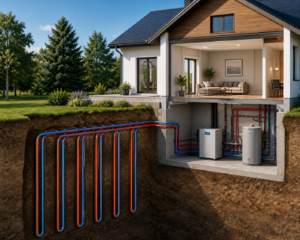
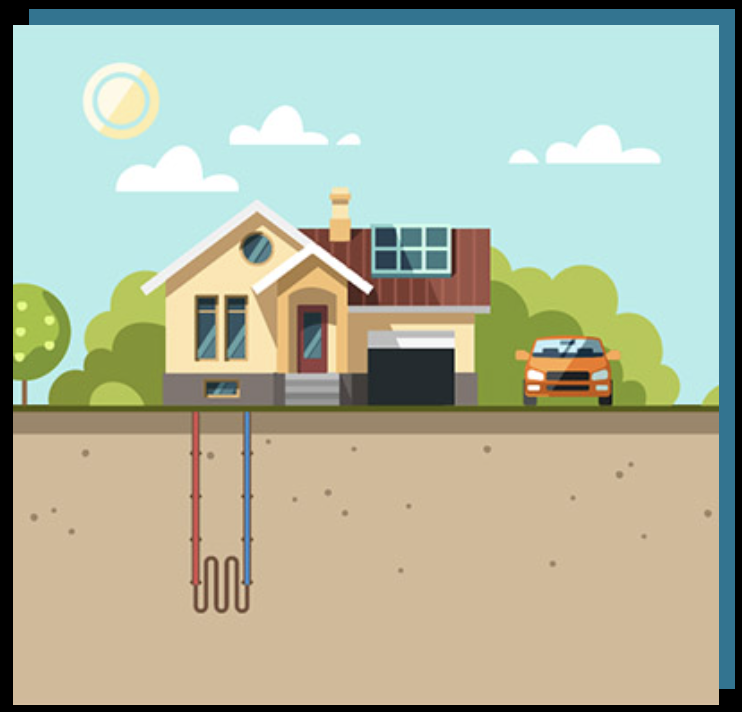
Geothermal systems tap into constant underground temperatures to provide heating and cooling with far less energy than conventional HVAC systems. Because they use electricity instead of combustion, they eliminate on-site fossil fuel use.
This makes Geothermal Systems for ESG and Net-Zero goals one of the most effective tools for reducing operational emissions from day one.
Supporting Geothermal Energy for Sustainable Development
Unlike solar or wind, geothermal energy is not weather-dependent. It delivers stable performance year-round, supporting geothermal energy for sustainable development in residential, commercial, and mixed-use projects.
How Geothermal Systems Reduce Carbon Emissions
Lower Operational Carbon Footprint
Traditional HVAC systems account for a significant portion of a building’s emissions. Geothermal heat pumps can reduce HVAC-related carbon output by up to 70%.
This directly supports:
- Low-carbon building technologies
- Long-term net-zero strategies
- ESG reporting benchmarks
By integrating Geothermal Systems for ESG and Net-Zero compliance, developers can significantly lower Scope 1 and Scope 2 emissions.
Electrification and Grid Compatibility
Geothermal systems pair perfectly with renewable electricity sources, making them ideal renewable HVAC systems for all-electric buildings. As grids become cleaner, geothermal performance improves even further.
ESG Compliant Heating and Cooling in Practice
Meeting Environmental Benchmarks
Geothermal directly contributes to:
- Lower greenhouse gas emissions
- Reduced energy intensity
- Improved energy performance certificates
This makes geothermal an ideal solution for ESG compliant heating and cooling strategies.
Enhancing Social ESG Outcomes
Comfort matters. Geothermal systems provide:
- Consistent indoor temperatures
- Quiet operation
- Improved air quality
These benefits enhance occupant well-being, directly contributing to the “Social” pillar of ESG.
Net-Zero Building Solutions That Scale
Designed for Long-Term Performance
Unlike rooftop systems that may require replacement every 15–20 years, underground geothermal loops can last 50 years or more.
This durability makes Geothermal Systems for ESG and Net-Zero targets financially and environmentally sustainable over the full asset lifecycle.
Flexible for New Builds and Retrofits
Geothermal works for:
- Residential communities
- Commercial offices
- Multi-family housing
- Institutional buildings
It integrates seamlessly into broader net-zero building solutions, regardless of project size.
Financial Benefits Developers Can’t Ignore
Reduced Operating Costs
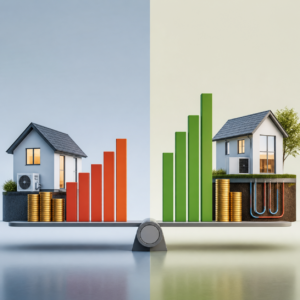
Although geothermal systems require higher upfront investment, operating costs are significantly lower due to high efficiency and minimal maintenance.
Over time, this results in:
- Lower energy bills
- Predictable operating expenses
- Stronger net operating income (NOI)
Stronger ESG Investment Appeal
Investors increasingly screen assets based on ESG metrics. Projects using Geothermal Systems for ESG and Net-Zero performance stand out as lower-risk, future-ready investments.
Regulatory Alignment and Future-Proofing
Staying Ahead of Carbon Regulations
Many jurisdictions are introducing:
- Carbon pricing
- Building performance standards
- Fossil fuel bans
Geothermal helps developers stay compliant without costly retrofits later.
Supporting Low-Carbon Building Technologies
As regulations tighten, geothermal systems provide a clear pathway toward adopting low-carbon building technologies that meet both current and future standards.
Geothermal vs Traditional HVAC: An ESG Comparison
| Factor | Traditional HVAC | Geothermal Systems |
| Carbon emissions | High | Very low |
| Energy efficiency | Moderate | Extremely high |
| ESG alignment | Limited | Strong |
| Lifecycle cost | High | Lower long-term |
| Net-zero readiness | Poor | Excellent |
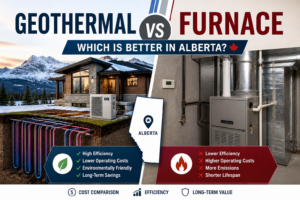
This comparison highlights why Geothermal Systems for ESG and Net-Zero objectives outperform conventional approaches.
Integration with Other Sustainable Technologies
Pairing with Solar and Smart Controls
Geothermal systems work exceptionally well with:
- Solar PV
- Battery storage
- Smart energy management systems
This synergy strengthens renewable HVAC systems strategies while enhancing ESG performance.
Data-Driven ESG Reporting
Geothermal systems provide measurable data on energy use and emissions, supporting transparent ESG disclosures and investor reporting.
Why Developers Choose Envirotech Geothermal
Envirotech Geothermal specializes in designing and implementing high-performance geothermal systems tailored to modern development needs. From feasibility analysis to system installation, the focus is always on long-term performance, ESG alignment, and operational savings.
By choosing Geothermal Systems for ESG and Net-Zero planning with Envirotech, developers gain a trusted partner in sustainable building innovation.
Common Myths About Geothermal Systems
“Geothermal is Only for Large Projects”
In reality, geothermal scales effectively for small and mid-size developments as well.
“Installation Is Too Disruptive”
With modern drilling techniques, installation is efficient and predictable—especially when planned early in the development cycle.
“Geothermal Is Experimental”
Geothermal technology has been used globally for decades and is one of the most proven renewable HVAC systems available today.
The Long-Term ESG Advantage
Buildings designed today will operate for decades. Those that rely on fossil fuels risk becoming stranded assets. By contrast, projects built around Geothermal Systems for ESG and Net-Zero goals remain compliant, efficient, and desirable long into the future.
This long-term resilience is what makes geothermal one of the smartest investments in net-zero building solutions available today.
Frequently Asked Questions
How do geothermal systems support ESG reporting?
Geothermal systems reduce emissions, lower energy use, and improve occupant comfort—all of which contribute directly to measurable ESG metrics and transparent sustainability reporting.
Are geothermal systems suitable for urban developments?
Yes. With vertical drilling and compact system designs, geothermal works well in dense urban environments and mixed-use developments.
Do geothermal systems help achieve net-zero certification?
Absolutely. Geothermal Systems for ESG and Net-Zero targets are often a core component of successful net-zero certification strategies due to their efficiency and low emissions.
Final Thoughts: Building Smarter, Cleaner, and Future-Ready
As ESG expectations rise and net-zero deadlines approach, developers need solutions that deliver real performance—not just good intentions. Geothermal technology offers a rare combination of environmental impact, financial return, and long-term reliability.
By adopting Geothermal Systems for ESG and Net-Zero objectives, developers position their projects for regulatory compliance, investor confidence, and long-term success.
Ready to Align Your Next Project with ESG and Net-Zero Goals?
Contact Envirotech Geothermal today to explore how a custom geothermal solution can help your development meet sustainability targets, reduce emissions, and future-proof your investment.