
When homeowners or commercial property owners start exploring geothermal heating and cooling, one of the first big decisions they face is choosing the right loop configuration. This is where the comparison of Vertical vs Horizontal Geothermal Loops becomes essential.
Both options are proven, efficient, and reliable—but they are not interchangeable. The right choice depends on land availability, soil conditions, budget, and long-term performance goals. Understanding Vertical vs Horizontal Geothermal Loops helps ensure your geothermal system delivers maximum efficiency, comfort, and return on investment.
In this guide, we’ll walk you through how geothermal loop systems work, the pros and cons of each design, land requirements, installation considerations, and how to choose the best solution for your property.
Understanding Geothermal Loop Systems
Before comparing Vertical vs Horizontal Geothermal Loops, it’s important to understand what geothermal loop systems actually do.
Geothermal systems rely on underground piping loops that circulate fluid to exchange heat with the earth. Because underground temperatures remain relatively stable year-round, these loops allow geothermal heat pumps to operate efficiently in both heating and cooling modes.
The Role of the Loop System
- Transfers heat between the building and the ground
- Determines system efficiency and reliability
- Accounts for a significant portion of installation planning
The choice between Vertical vs Horizontal Geothermal Loops directly impacts system design, land use, and installation cost.
What Are Vertical Geothermal Loops?
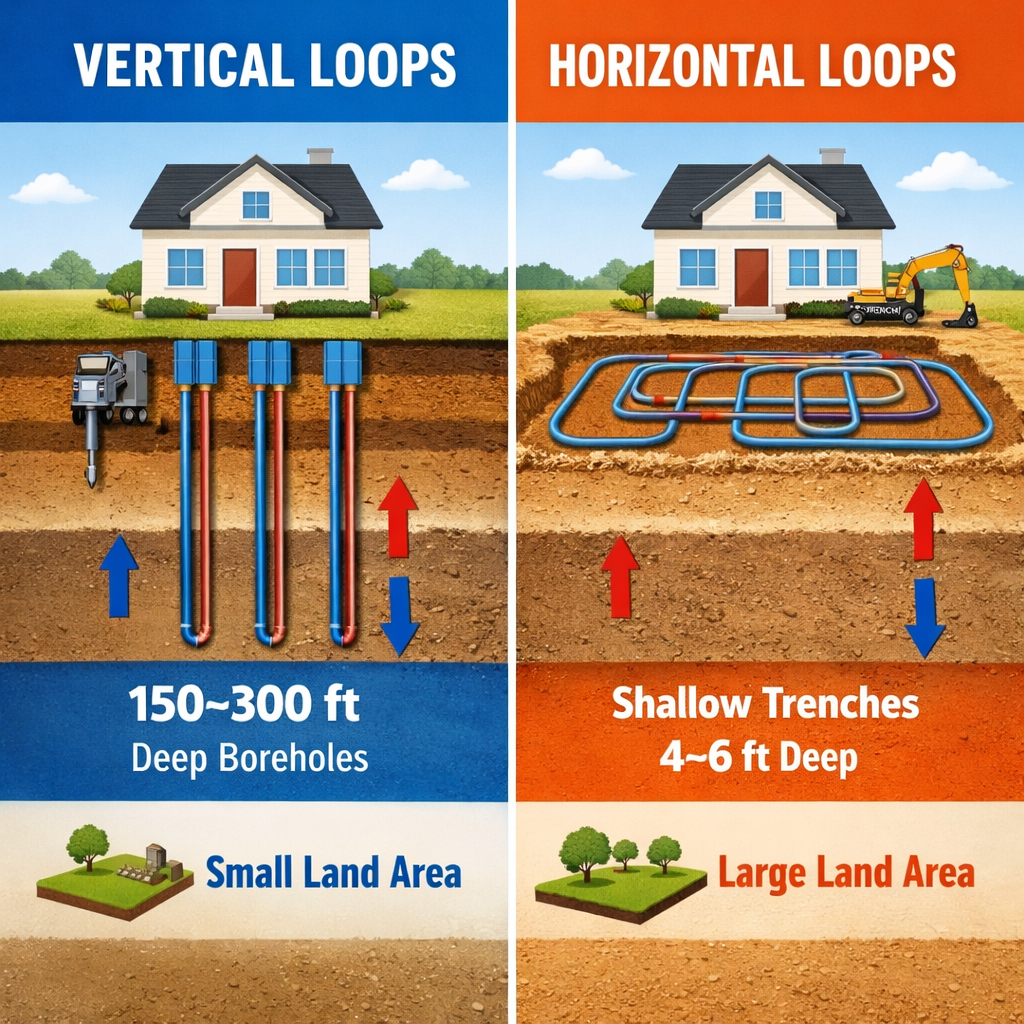
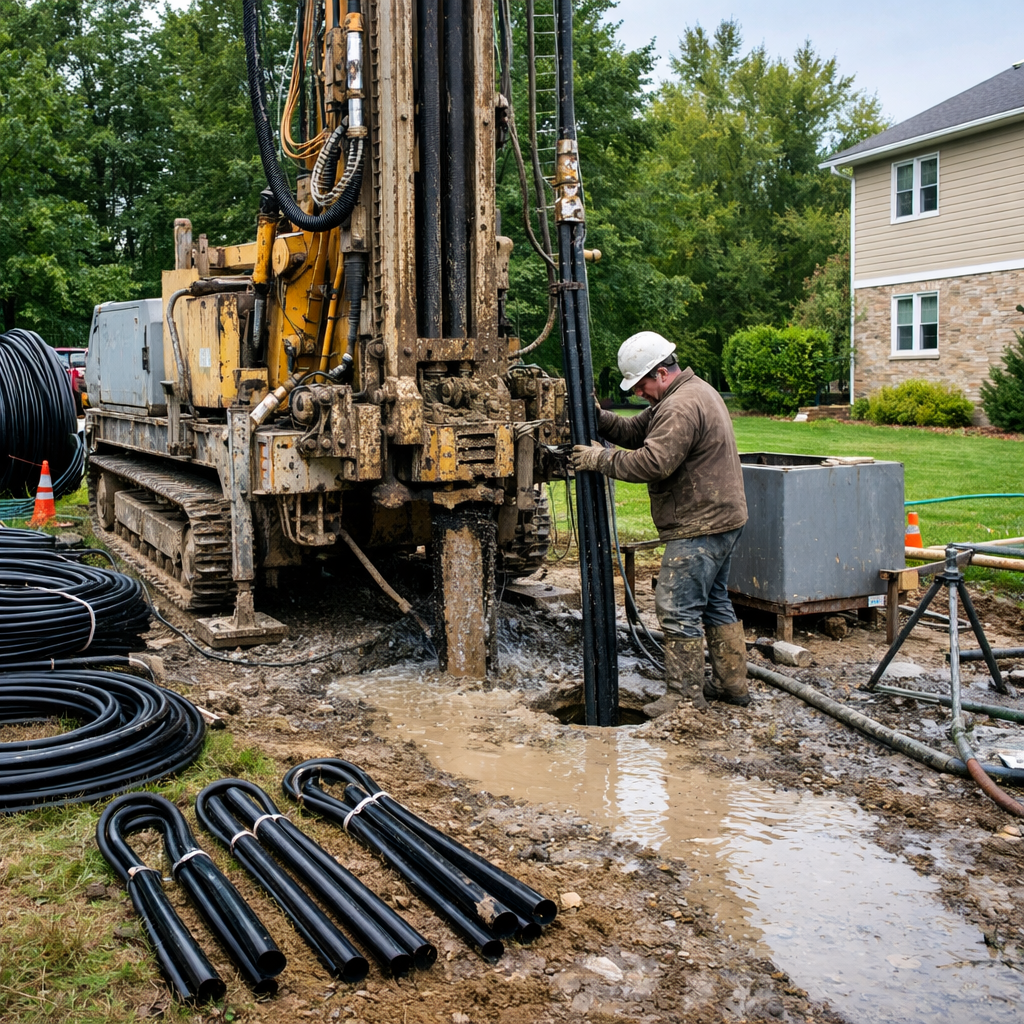
Vertical geothermal loops are installed by drilling deep boreholes into the ground—often between 150 and 500 feet deep. U-shaped pipes are placed into these vertical wells and sealed with grout to ensure effective heat transfer.
Where Vertical Loops Are Commonly Used
- Properties with limited land space
- Urban or suburban lots
- Commercial buildings
- Schools, hospitals, and office complexes
When comparing Vertical vs Horizontal Geothermal Loops, vertical systems are often chosen when land area is restricted.
What Are Horizontal Geothermal Loops?
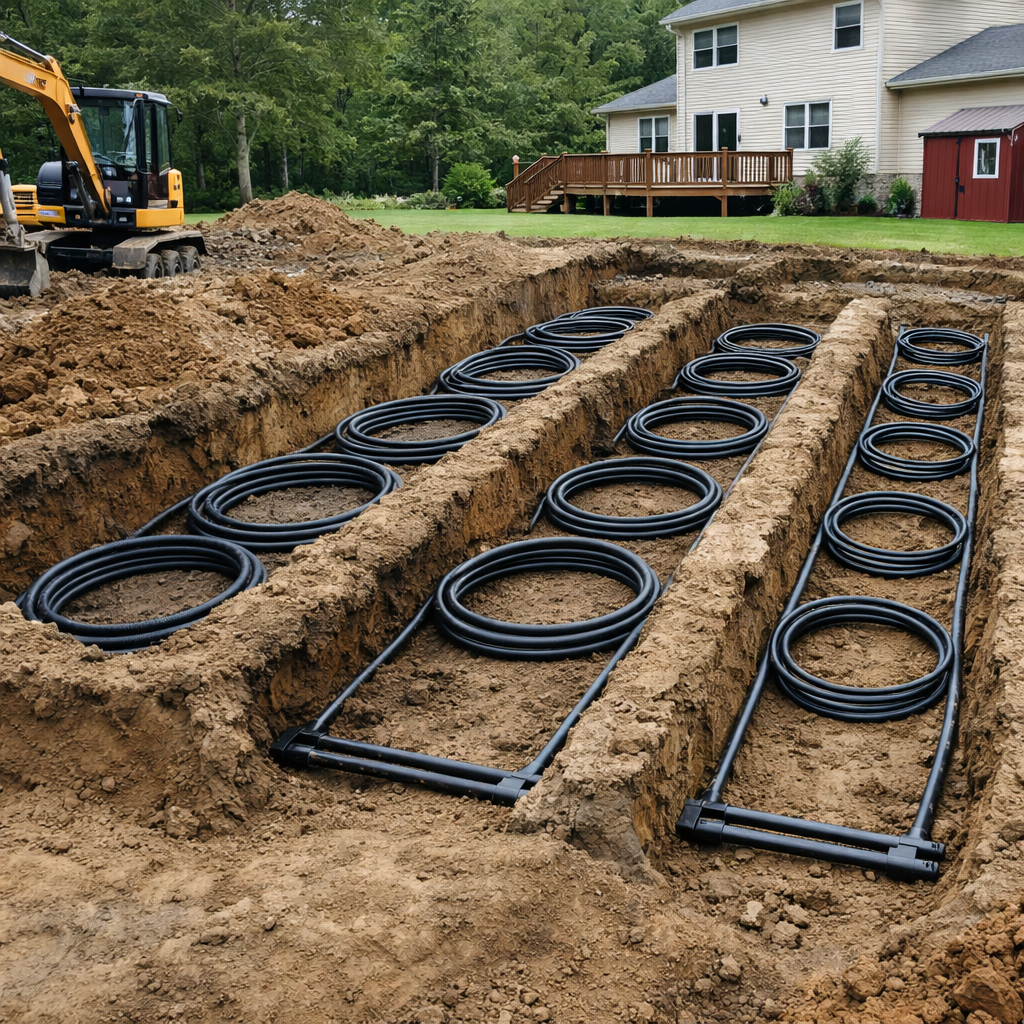
Horizontal geothermal loops are installed in trenches dug several feet below the surface, typically 4 to 10 feet deep. The piping is laid out horizontally across a larger land area.
Where Horizontal Loops Work Best
- Rural or suburban properties
- Homes with large yards
- New construction projects
- Areas with easy excavation access
In the discussion of Vertical vs Horizontal Geothermal Loops, horizontal systems are often preferred when sufficient land is available.
Vertical vs Horizontal Geothermal Loops: Key Differences
The core difference between Vertical vs Horizontal Geothermal Loops comes down to depth versus space.
Comparison at a Glance
- Vertical geothermal loops use depth, not surface area
- Horizontal geothermal loops use land area, not depth
- Both deliver excellent efficiency when properly designed
Understanding these differences is the foundation for selecting the right geothermal heat pump installation.
Pros of Vertical Geothermal Loops
1. Minimal Land Requirements
One of the biggest advantages of vertical geothermal loops is reduced surface land use. This makes them ideal for smaller properties or developed sites.
2. Stable Ground Temperatures
Deeper ground temperatures are more consistent, which can enhance long-term system performance. This is often a deciding factor in Vertical vs Horizontal Geothermal Loops comparisons.
3. Less Landscape Disruption
While drilling is required, the surface footprint is relatively small compared to horizontal trenching.
4. Ideal for Large Buildings
Commercial and institutional projects often rely on vertical geothermal loops due to space constraints and higher energy demands.
Cons of Vertical Geothermal Loops
1. Higher Installation Costs
Drilling deep boreholes requires specialized equipment, making vertical geothermal loops more expensive upfront.
2. Longer Installation Timeline
Drilling can take longer than trenching, depending on soil and rock conditions.
3. Site-Specific Limitations
Rocky or restricted drilling zones may increase complexity, which must be considered when evaluating Vertical vs Horizontal Geothermal Loops.
Pros of Horizontal Geothermal Loops
1. Lower Installation Cost
Horizontal geothermal loops typically cost less to install because trenching is simpler than deep drilling.
2. Straightforward Construction Process
For properties with open land, installation is often faster and less technically complex.
3. Excellent Efficiency for Homes
When space allows, horizontal loops deliver excellent performance for residential geothermal heat pump installation.
Cons of Horizontal Geothermal Loops
1. Larger Land Requirements
One of the biggest drawbacks of horizontal systems is space. Geothermal land requirements are much higher for horizontal loops.
2. Greater Surface Disruption
Trenching can disturb landscaping, lawns, and hardscaping.
3. Seasonal Soil Temperature Fluctuations
Shallower loops may experience slightly more temperature variation than vertical systems, which can factor into Vertical vs Horizontal Geothermal Loops decisions.
Geothermal Land Requirements Explained
Land availability plays a major role in choosing between Vertical vs Horizontal Geothermal Loops.
Typical Space Requirements
- Horizontal geothermal loops may require 1,500 to 3,000 square feet or more
- Vertical geothermal loops may need only a small drilling area
Understanding geothermal land requirements early helps avoid design changes later in the project.
Soil and Geological Considerations
Soil conditions influence loop performance and installation feasibility.
Factors That Matter
- Soil composition
- Moisture content
- Rock depth
- Groundwater presence
These factors are evaluated during site assessments to determine whether Vertical vs Horizontal Geothermal Loops are more suitable.
Efficiency Comparison: Vertical vs Horizontal Geothermal Loops
When properly designed, both loop types are highly efficient.
Performance Insights
- Vertical loops often deliver slightly more consistent efficiency due to stable deep-ground temperatures
- Horizontal loops perform exceptionally well when installed correctly in suitable soil
From an operational standpoint, Vertical vs Horizontal Geothermal Loops are more similar than many people expect.
Installation Process Overview
Vertical Geothermal Heat Pump Installation
- Site evaluation and drilling plan
- Borehole drilling
- Loop insertion and grouting
- Connection to indoor system
Horizontal Geothermal Heat Pump Installation
- Site layout and trench planning
- Excavation
- Loop placement
- Backfilling and restoration
Both methods require professional design to ensure long-term reliability, which is why expert guidance is crucial when choosing Vertical vs Horizontal Geothermal Loops.
Cost Comparison Over Time
Upfront Costs
- Vertical systems generally cost more initially
- Horizontal systems usually have lower installation costs
Long-Term Value
- Both offer low operating costs
- Maintenance requirements are minimal
- System lifespan is similar
When evaluated over decades, Vertical vs Horizontal Geothermal Loops often deliver comparable lifetime value.
Residential Applications
For homeowners, the choice between Vertical vs Horizontal Geothermal Loops often comes down to yard size.
- Small lots: vertical geothermal loops
- Large properties: horizontal geothermal loops
Both options provide quiet, efficient, and comfortable heating and cooling.
Commercial and Institutional Applications
Large buildings often favor vertical geothermal loops due to space limitations and scalability. However, campuses with open land may successfully use horizontal systems.
In these projects, Vertical vs Horizontal Geothermal Loops decisions are guided by engineering studies and long-term energy goals.
Environmental Impact
Both loop types are environmentally friendly.
Shared Environmental Benefits
- No on-site combustion
- Reduced carbon emissions
- Minimal visual impact after installation
From a sustainability standpoint, Vertical vs Horizontal Geothermal Loops are equally strong choices.
Longevity and Maintenance
Geothermal loop systems are designed to last.
- Underground loops: 40–50+ years
- Heat pump units: 20–25 years
This durability makes geothermal heat pump installation a long-term investment regardless of whether you choose vertical or horizontal loops.
Which Loop System Is Right for You?
Choosing between Vertical vs Horizontal Geothermal Loops depends on several factors:
- Available land
- Soil and geology
- Budget
- Building size
- Long-term plans
A professional site assessment ensures the system is designed for optimal performance.
Common Misconceptions About Geothermal Loops
Myth 1: Vertical Loops Are Always Better
Not true. Horizontal loops can be just as effective with adequate land.
Myth 2: Horizontal Loops Don’t Last as Long
Both loop types have similar lifespans when properly installed.
Myth 3: Installation Always Destroys Landscaping
With careful planning, site restoration is very manageable.
Understanding these facts makes the Vertical vs Horizontal Geothermal Loops decision much clearer.
Final Thoughts on Vertical vs Horizontal Geothermal Loops
Both loop types are proven, efficient, and environmentally responsible. The real difference lies in land availability, site conditions, and installation approach.
When designed correctly, Vertical vs Horizontal Geothermal Loops deliver the same core benefits: lower energy bills, reliable comfort, and long-term sustainability.
Ready to Choose the Right Geothermal Loop System?
If you’re comparing Vertical vs Horizontal Geothermal Loops, expert guidance can make all the difference. Envirotech Geothermal specializes in designing and installing customized geothermal loop systems for residential, commercial, and institutional projects.
👉 Contact Envirotech Geothermal today to schedule a consultation and discover the most efficient, cost-effective geothermal solution for your property.
Frequently Asked Questions
Which is better: vertical or horizontal geothermal loops?
Neither is universally better. The best option depends on land availability, soil conditions, and project goals.
Do vertical geothermal loops cost more?
Yes, upfront costs are usually higher due to drilling, but long-term operating costs are similar.
How much land do horizontal geothermal loops need?
Geothermal land requirements vary, but horizontal systems typically need significantly more surface area than vertical systems.