As the world searches for reliable ways to cut emissions without sacrificing energy security, one powerful idea is gaining momentum: the Integration of Carbon Capture & Geothermal. This emerging approach combines two proven technologies—carbon capture and geothermal energy—to create a cleaner, more dependable path toward low-carbon power generation.
Unlike intermittent renewables alone, geothermal offers constant energy, while carbon capture addresses emissions at their source. Together, they form a compelling solution for industries, utilities, and communities seeking long-term climate stability. In this article, we’ll explore how the Integration of Carbon Capture & Geothermal works, why it matters, and how it could shape the future of sustainable energy.
Why the Energy Transition Needs More Than One Solution
The global clean energy transition is complex. While solar and wind are essential, they don’t always provide consistent power. At the same time, many industries still rely on fossil fuels for baseload energy.
This is where the Integration of Carbon Capture & Geothermal becomes critical. Instead of choosing between reliability and sustainability, this approach delivers both—supporting a realistic and scalable energy transition.
Understanding the Basics: Carbon Capture and Geothermal
Before diving into integration, it helps to understand the individual technologies.
What Is Carbon Capture and Storage (CCS)?
Carbon capture and storage (CCS) is a process that:
- Captures carbon dioxide emissions from power plants or industrial facilities
- Transports the CO₂ safely
- Stores it deep underground to prevent release into the atmosphere
CCS plays a key role in reducing emissions from existing energy infrastructure.
What Is Geothermal Power Generation?
Geothermal power generation uses heat from beneath the Earth’s surface to produce electricity or provide heating and cooling. It is:
- Renewable
- Reliable
- Available 24/7
This makes geothermal a cornerstone of sustainable baseload energy.
The Concept Behind the Integration of Carbon Capture & Geothermal
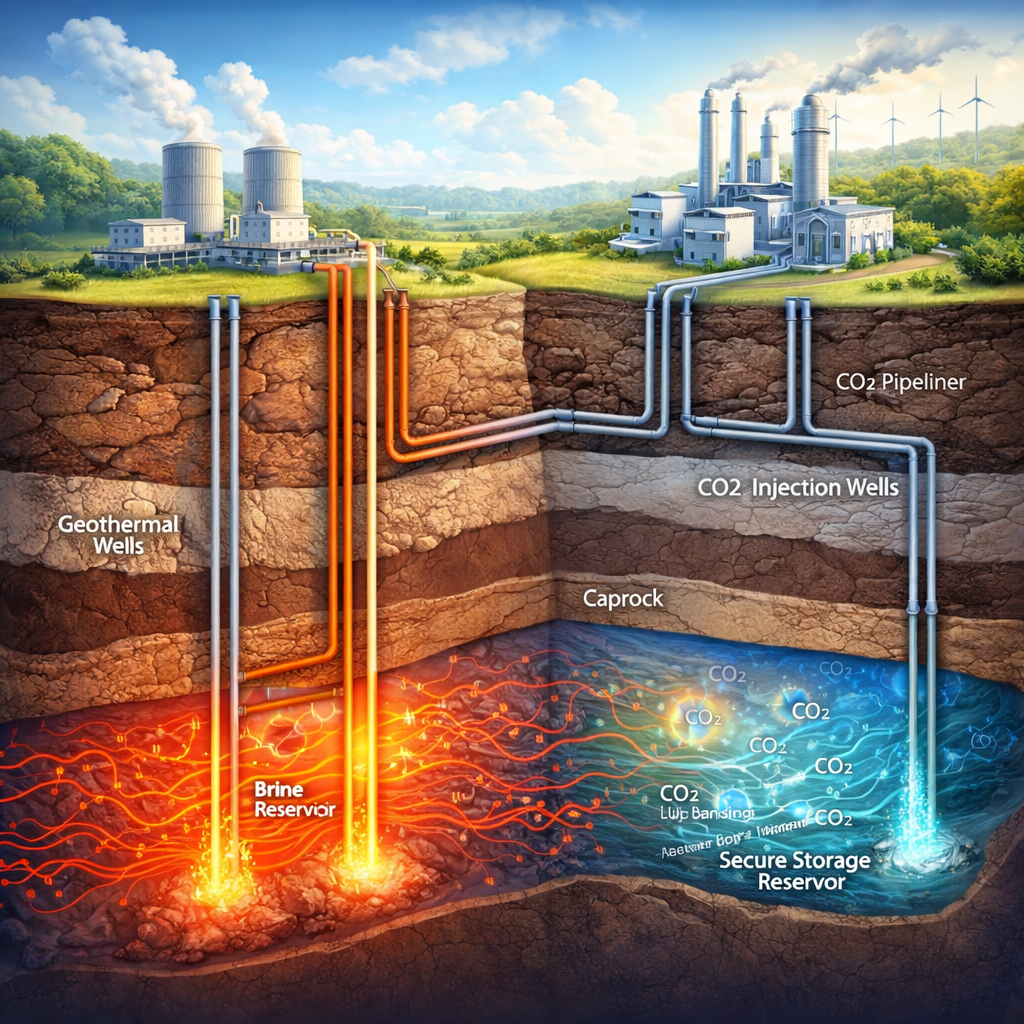
The Integration of Carbon Capture & Geothermal brings these two systems together in a complementary way.
How the Integration Works
- Geothermal systems provide steady, low-emission energy
- CCS captures remaining carbon from hybrid or transitional systems
- Underground formations can support both geothermal operations and CO₂ storage
This synergy enhances efficiency and supports the development of carbon-neutral power plants.
Why Integration Matters for Low-Carbon Energy Solutions
The push for low-carbon energy solutions requires technologies that are both scalable and dependable.
Key Benefits of Integration
- Significant reduction in greenhouse gas emissions
- Reliable baseload power supply
- Improved efficiency of existing energy assets
- Long-term energy security
By combining strengths, the Integration of Carbon Capture & Geothermal addresses gaps that single technologies cannot solve alone.
Supporting Carbon-Neutral Power Plants
One of the most exciting applications of the Integration of Carbon Capture & Geothermal is in the development of carbon-neutral power plants.
How Integration Enables Carbon Neutrality
- Geothermal energy reduces reliance on fossil fuels
- CCS offsets unavoidable emissions
- Net emissions approach zero
This model allows regions with existing power infrastructure to transition without complete system replacement.
Sustainable Baseload Energy: A Critical Advantage
Energy systems need stability. Hospitals, data centers, and manufacturing facilities can’t rely on intermittent power alone.
Why Geothermal Excels as Baseload Energy
- Constant underground heat supply
- Minimal weather dependence
- Long operational lifespan
When paired with CCS, geothermal becomes a backbone of sustainable baseload energy—one of the strongest arguments for the Integration of Carbon Capture & Geothermal.
Industrial Applications of Integrated Systems
Heavy industries face some of the toughest decarbonization challenges.
Where Integration Makes the Biggest Impact
- Cement and steel production
- Chemical manufacturing
- Oil and gas transition projects
In these sectors, the Integration of Carbon Capture & Geothermal offers a practical path to emissions reduction without disrupting operations.
Reusing Existing Infrastructure
One advantage of integration is the ability to repurpose existing assets.
Infrastructure Synergies
- Depleted oil and gas wells for geothermal use
- Existing pipelines for CO₂ transport
- Shared subsurface geological data
These efficiencies reduce costs and accelerate deployment of low-carbon energy solutions.
Economic Benefits of Integration
Beyond environmental gains, the Integration of Carbon Capture & Geothermal offers economic advantages.
Cost and Investment Benefits
- Lower long-term operating costs
- Extended life of existing facilities
- Job creation in clean energy sectors
- Reduced exposure to carbon pricing
These benefits make integration attractive to both public and private stakeholders.
Environmental and Climate Impact
The environmental case for integration is strong.
Positive Climate Outcomes
- Reduced atmospheric CO₂
- Lower reliance on fossil fuels
- Improved air quality
- Support for climate targets
By combining geothermal power generation with CCS, integrated systems deliver measurable climate progress.
Challenges and Considerations
While promising, integration is not without challenges.
Key Considerations
- Upfront capital investment
- Regulatory alignment
- Site-specific geological requirements
- Public awareness and education
Addressing these challenges is essential for scaling the Integration of Carbon Capture & Geothermal globally.
Policy and Regulatory Support
Strong policy frameworks can accelerate adoption.
What Supportive Policies Can Do
- Encourage pilot projects
- Provide financial incentives
- Streamline permitting
- Promote research and development
Clear policy direction will be vital to unlocking the full potential of integrated systems.
The Role of Innovation and Technology
Advancements continue to improve feasibility.
Innovations Driving Integration Forward
- Enhanced geothermal systems (EGS)
- Improved CO₂ monitoring and storage techniques
- Advanced drilling technologies
- Digital optimization tools
These innovations strengthen the case for the Integration of Carbon Capture & Geothermal as a future-ready solution.
Global Implications for Clean Energy
As countries pursue net-zero goals, integrated solutions gain relevance.
Why Global Adoption Is Likely
- Compatible with diverse energy systems
- Scalable across regions
- Supports both transition and end-state strategies
The Integration of Carbon Capture & Geothermal could become a global model for clean, reliable power.
How This Integration Aligns With Long-Term Energy Goals
Energy strategies increasingly emphasize resilience and sustainability.
Alignment With Future Goals
- Net-zero emissions targets
- Energy independence
- Grid reliability
- Sustainable development
Integrated systems help meet these goals without compromising performance.
The Future Outlook
Looking ahead, the Integration of Carbon Capture & Geothermal represents a bridge between today’s energy systems and tomorrow’s clean grid.
It allows:
- Gradual transition
- Reduced risk
- Continuous energy supply
As technology advances and costs decline, integration is expected to play a growing role in global energy portfolios.
Final Thoughts: A Smarter Path to Low-Carbon Power
The transition to clean energy requires solutions that are practical, reliable, and scalable. By combining geothermal’s stability with the emissions control of CCS, the Integration of Carbon Capture & Geothermal offers a powerful answer.
It supports carbon-neutral power plants, strengthens sustainable baseload energy, and accelerates the shift toward low-carbon energy solutions—all without sacrificing reliability.
Ready to Explore the Future of Geothermal Energy?
If you’re interested in innovative geothermal solutions or want to understand how integrated systems can support a low-carbon future, Envirotech Geothermal is here to help.
👉 Contact Envirotech Geothermal today to explore how advanced geothermal technologies can support sustainable, reliable, and future-ready energy solutions.
Frequently Asked Questions
What makes the integration of carbon capture and geothermal unique?
It combines constant renewable energy with emissions control, delivering reliable and low-carbon power at the same time.
Is the Integration of Carbon Capture & Geothermal commercially viable today?
Yes. While still expanding, pilot projects and commercial applications already demonstrate strong potential.
Can integrated systems support large-scale power needs?
Absolutely. Geothermal provides baseload energy, while CCS ensures emissions remain low, even at scale.