
When people first hear about geothermal systems, one question often comes up: Why are they so efficient compared to traditional heating and cooling? The answer lies beneath our feet. Ground Temperature Stability is the quiet powerhouse behind geothermal performance, making these systems reliable, efficient, and cost-effective year after year.
Unlike air-based systems that struggle with weather extremes, geothermal systems tap into the earth’s naturally stable temperatures. This article explains how Ground Temperature Stability works, why it matters so much for efficiency, and how it makes geothermal one of the smartest long-term energy choices for homes and buildings.
Understanding Ground Temperature Stability
To understand geothermal efficiency, we first need to understand Ground Temperature Stability itself.
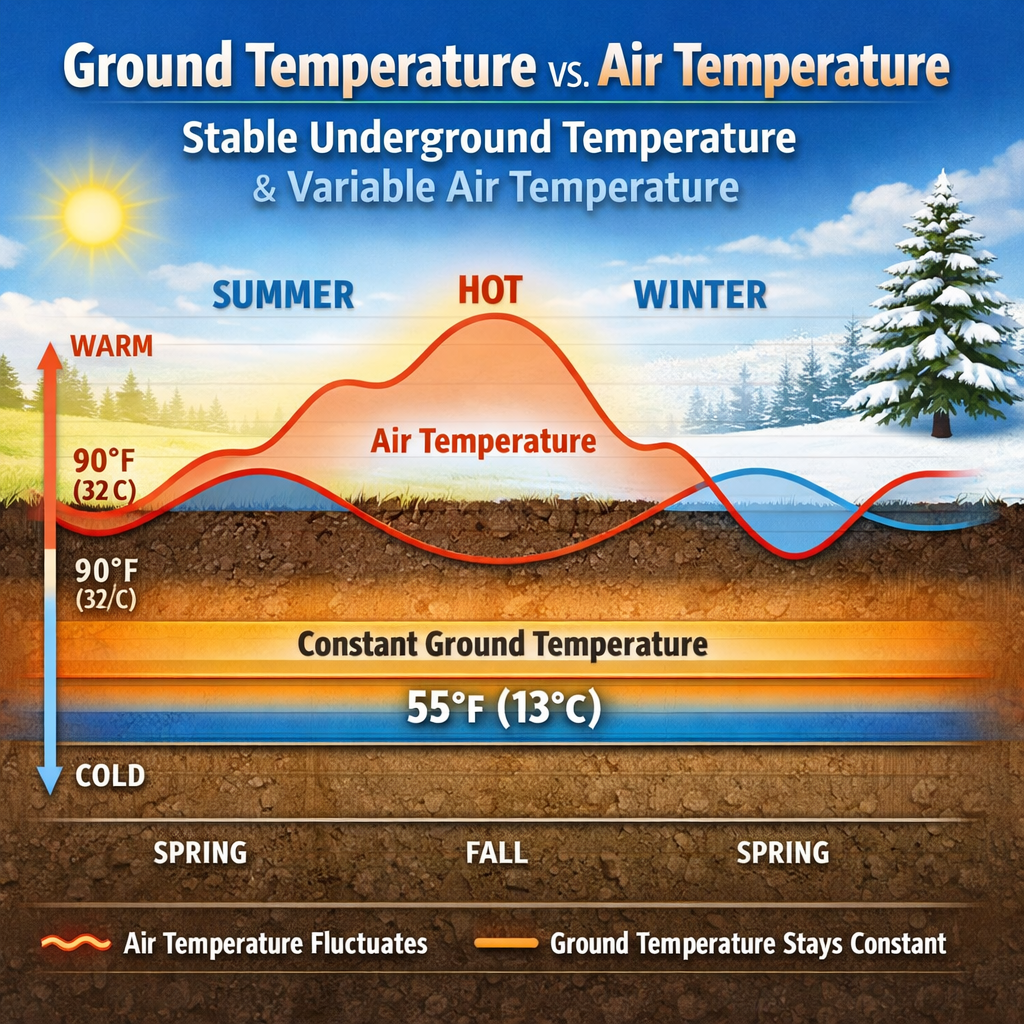
A few feet below the earth’s surface, temperatures remain remarkably consistent throughout the year. While air temperatures may swing from freezing winters to scorching summers, underground temperatures stay within a narrow range.
This stable ground temperature is the foundation of geothermal heating and cooling—and the reason geothermal systems don’t have to “fight” the weather.
Why the Ground Stays the Same Temperature Year-Round
The Science Behind Stable Ground Temperature
Soil and rock act as natural insulation. As you go deeper underground, the influence of daily and seasonal weather disappears. In most regions:
- Ground temperature remains between 45°F and 70°F
- Seasonal swings are minimal
- Temperatures change slowly and predictably
This Ground Temperature Stability creates the perfect environment for energy-efficient heat exchange.
How Geothermal Systems Use Ground Temperature Stability
Geothermal systems don’t generate heat—they move it.
The Heat Exchange Process
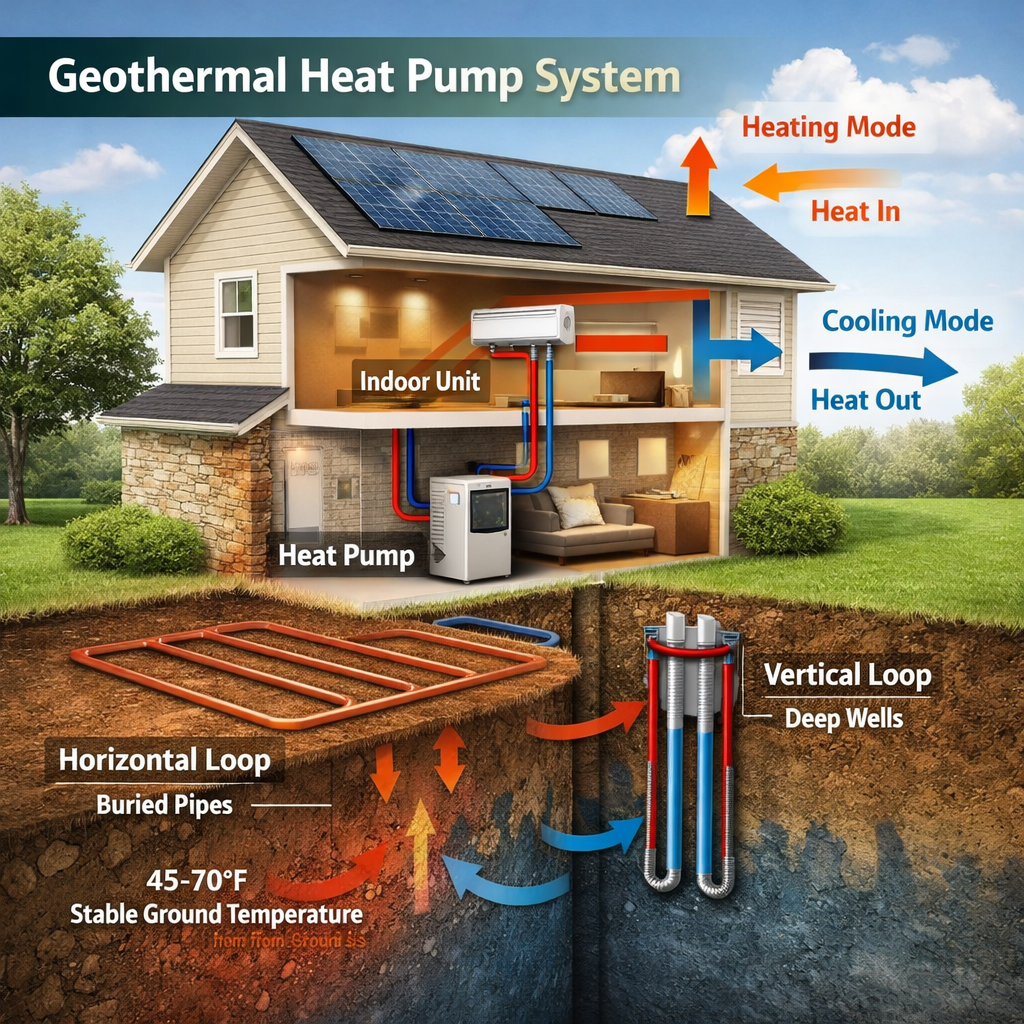
- In winter, geothermal systems pull heat from the ground into the building
- In summer, they move heat from the building back into the ground
Because the ground temperature is stable, the system operates under ideal conditions year-round. This is the core reason Ground Temperature Stability drives high geothermal energy efficiency.
Ground Temperature Stability vs Outdoor Air Temperature
Traditional HVAC systems rely on outdoor air, which is highly unpredictable.
Air-Based Systems Struggle Because:
- Cold air holds very little heat in winter
- Hot air makes cooling harder in summer
- Extreme temperatures reduce efficiency
By contrast, Ground Temperature Stability eliminates these challenges entirely, allowing geothermal systems to maintain consistent performance.
Geothermal Efficiency Starts Underground
Why Stable Temperatures Improve Efficiency
Geothermal efficiency improves because:
- Less energy is required to move heat
- Equipment operates under less stress
- Heat transfer is faster and more reliable
This leads directly to higher geothermal heat pump efficiency and lower energy consumption.
Geothermal Heat Pump Efficiency Explained Simply
A geothermal heat pump works best when the temperature difference between the source and destination is small.
Thanks to Ground Temperature Stability:
- Winter heating pulls heat from 50–60°F ground instead of 10°F air
- Summer cooling dumps heat into cooler ground instead of 95°F air
This small temperature gap is why geothermal heat pump efficiency consistently outperforms conventional systems.
The Role of Ground Loops in Temperature Stability
What Ground Loops Do
Ground loops are underground pipes that circulate fluid to exchange heat with the earth.
They:
- Access stable ground temperature
- Transfer heat efficiently
- Maintain consistent system performance
Without Ground Temperature Stability, geothermal heating and cooling would not be nearly as effective.
Ground Temperature Stability in All Seasons
Winter Performance
During winter:
- The ground remains warmer than the air
- Geothermal systems extract usable heat easily
- Efficiency remains high even in extreme cold
Summer Performance
During summer:
- The ground is cooler than outdoor air
- Heat rejection is more efficient
- Cooling costs stay low
In every season, Ground Temperature Stability keeps geothermal systems operating smoothly.
How Ground Temperature Stability Reduces Energy Use
Geothermal systems require less electricity because:
- They don’t create heat
- They don’t fight extreme temperatures
- They move energy efficiently
This is why geothermal energy efficiency often exceeds 300–400%, far beyond traditional HVAC performance.
Ground Temperature Stability and System Longevity
Less Stress on Equipment
Because operating conditions are stable:
- Compressors work less aggressively
- Wear and tear is reduced
- Maintenance needs are lower
Over time, Ground Temperature Stability contributes to longer system lifespan and lower ownership costs.
Geothermal Heating and Cooling for Homes
For homeowners, Ground Temperature Stability translates into:
- Consistent indoor comfort
- Lower monthly energy bills
- Quiet operation
- Reliable performance in extreme weather
Geothermal heating and cooling feels more stable because it truly is.
Geothermal Systems in Commercial Buildings
Large buildings benefit even more from Ground Temperature Stability.
Why Commercial Systems Excel
- High energy loads amplify efficiency gains
- Stable performance supports continuous operation
- Predictable costs improve long-term budgeting
This is why geothermal energy efficiency is especially attractive for schools, hospitals, and office complexes.
Comparing Geothermal Efficiency to Traditional HVAC
Traditional Systems
- Depend on outdoor air
- Lose efficiency in extreme temperatures
- Require backup heating or cooling
Geothermal Systems
- Rely on Ground Temperature Stability
- Maintain consistent efficiency
- Deliver year-round performance
The difference is dramatic over time.
Ground Temperature Stability and Climate Resilience
Extreme weather events are becoming more common. Geothermal systems remain unaffected because:
- Underground temperatures don’t fluctuate
- Heat exchange stays consistent
- Performance remains reliable
Ground Temperature Stability makes geothermal one of the most climate-resilient energy systems available today.
Environmental Benefits of Stable Ground Temperature Use
Using the earth’s natural temperature:
- Reduces fossil fuel use
- Lowers greenhouse gas emissions
- Supports sustainability goals
Geothermal energy efficiency is not just economical—it’s environmentally responsible.
Misconceptions About Ground Temperature Stability
Myth: Ground Temperature Changes Too Much
In reality, temperatures a few feet underground remain stable year-round.
Myth: Stability Doesn’t Matter Much
In fact, Ground Temperature Stability is the single biggest driver of geothermal performance.
Myth: It Only Works in Mild Climates
Geothermal systems work efficiently in both hot and cold regions because the ground stays stable everywhere.
Why Ground Temperature Stability Is a Long-Term Advantage
As energy prices rise, systems that rely on natural stability become more valuable.
Long-Term Benefits Include:
- Predictable operating costs
- Reduced maintenance
- Long system lifespan
- Higher property value
All of these benefits trace back to Ground Temperature Stability.
The Future of Efficient Heating and Cooling
As buildings move toward electrification and sustainability, geothermal stands out.
Why the Future Favors Geothermal
- High geothermal efficiency
- Reliable geothermal heating and cooling
- Minimal environmental impact
- Strong long-term performance
And at the center of it all is Ground Temperature Stability.
Final Thoughts: Why Ground Temperature Stability Changes Everything
Geothermal systems don’t rely on complex tricks or extreme technology. They simply take advantage of something the earth provides naturally: consistent underground temperatures.
Ground Temperature Stability is what makes geothermal systems efficient, durable, and dependable. It’s the reason geothermal heat pump efficiency outperforms traditional HVAC and why geothermal energy efficiency continues to gain attention worldwide.
Frequently Asked Questions
How deep do geothermal systems go to access stable ground temperature?
Most systems reach depths where ground temperatures remain consistent year-round, typically just a few feet to several hundred feet depending on design.
Does ground temperature stability vary by location?
While exact temperatures vary slightly by region, Ground Temperature Stability exists everywhere and remains far more consistent than air temperature.
Is geothermal efficiency worth the upfront investment?
Yes. High geothermal efficiency, lower energy bills, and long system life make geothermal a strong long-term investment.
Ready to Experience the Power of Stable Ground Temperature?
If you’re curious how Ground Temperature Stability can improve comfort, efficiency, and energy savings in your home or building, Envirotech Geothermal is here to help.
👉 Contact Envirotech Geothermal today to learn how geothermal heating and cooling can deliver unmatched efficiency powered by the earth itself.